
戏文小注
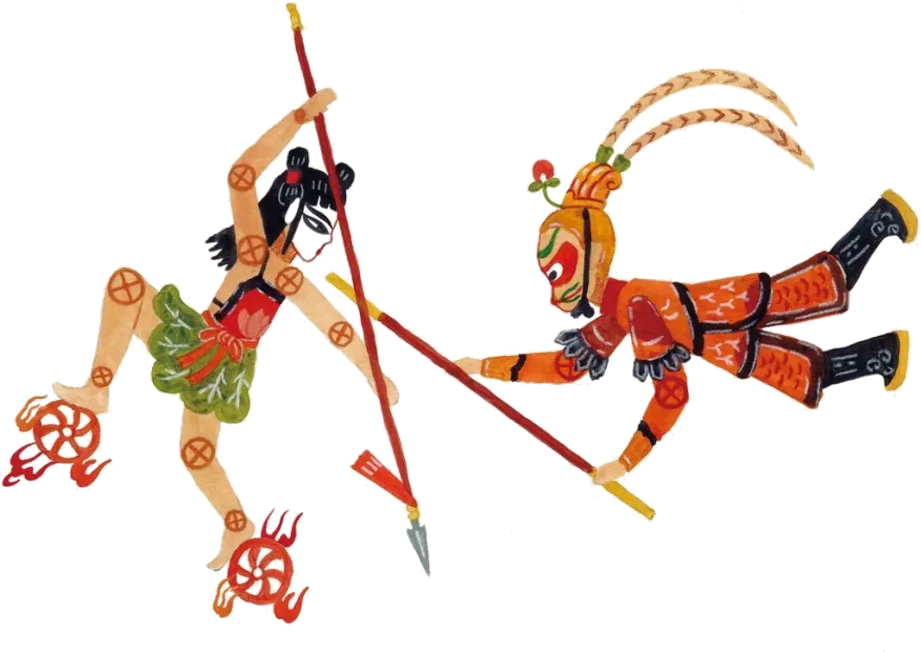
虚心克傲,谦和待人,彼此欣赏,互相成全。真正的强者懂得尊重他人、包容差异,以真诚与大度立身处世。
幕启 · 戏开
从一出戏,读懂谦逊、担当与彼此成全。
虚心克傲,谦和待人,彼此欣赏,互相成全。真正的强者懂得尊重他人、包容差异,以真诚与大度立身处世。
与人相处时放下骄傲与偏见,多看他人长处,多一份包容与理解。虚心取长补短,既能成就自己,也能温暖身边人。
沿着历史、木偶与脸谱三条线索认识高州木偶戏。
一根木杆,百年唱腔;方寸戏台,延续粤西文脉。
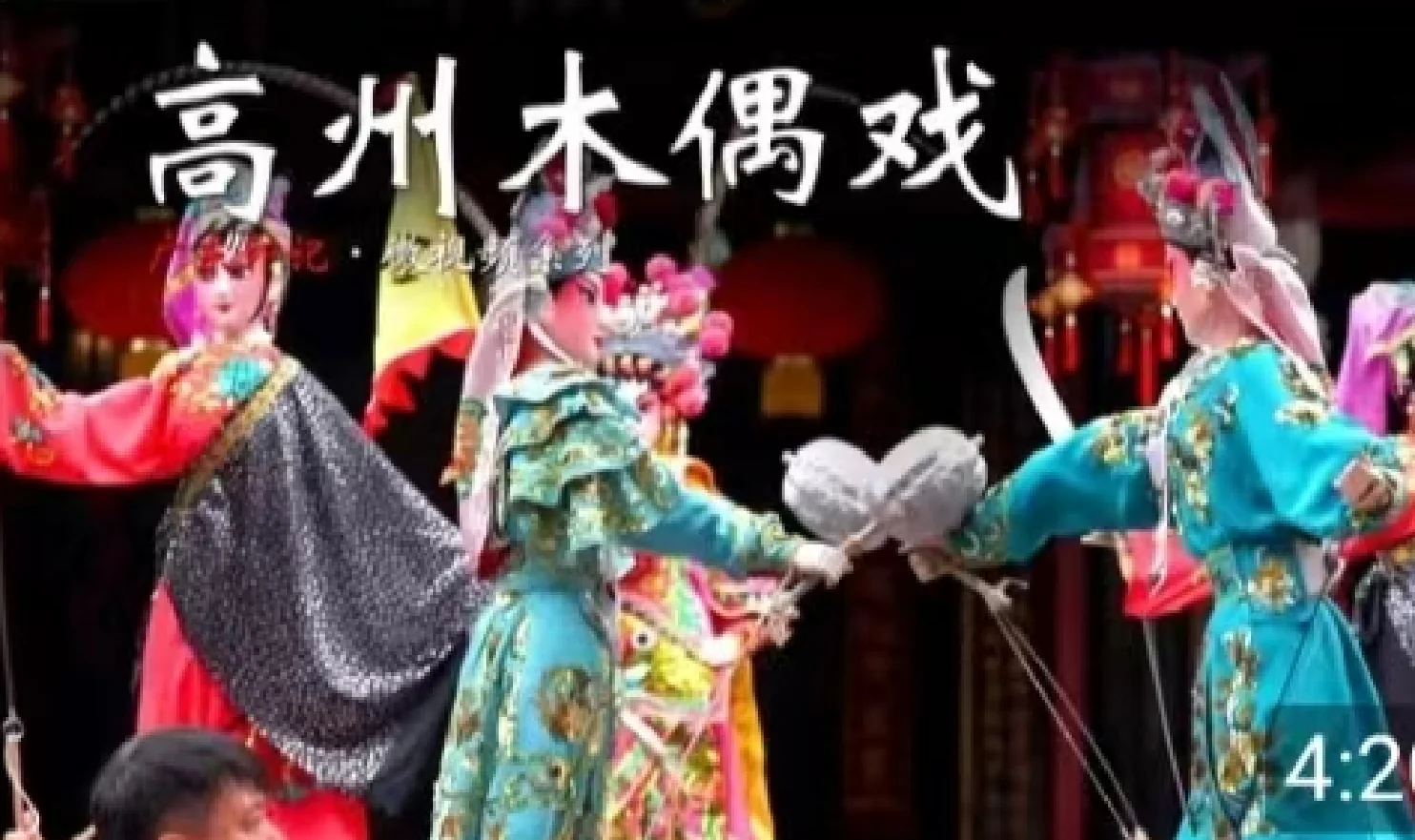
高州木偶戏俗称“鬼仔戏”,属于布袋木偶,据说是因“琢木为偶”而得名。相传其取法于福建布袋戏,产生于明朝万历年间,迄今已有四百多年的历史。每逢农历“年例”(社日),高州几乎各个村落都会表演木偶戏,唱咏之间,喜气洋洋。
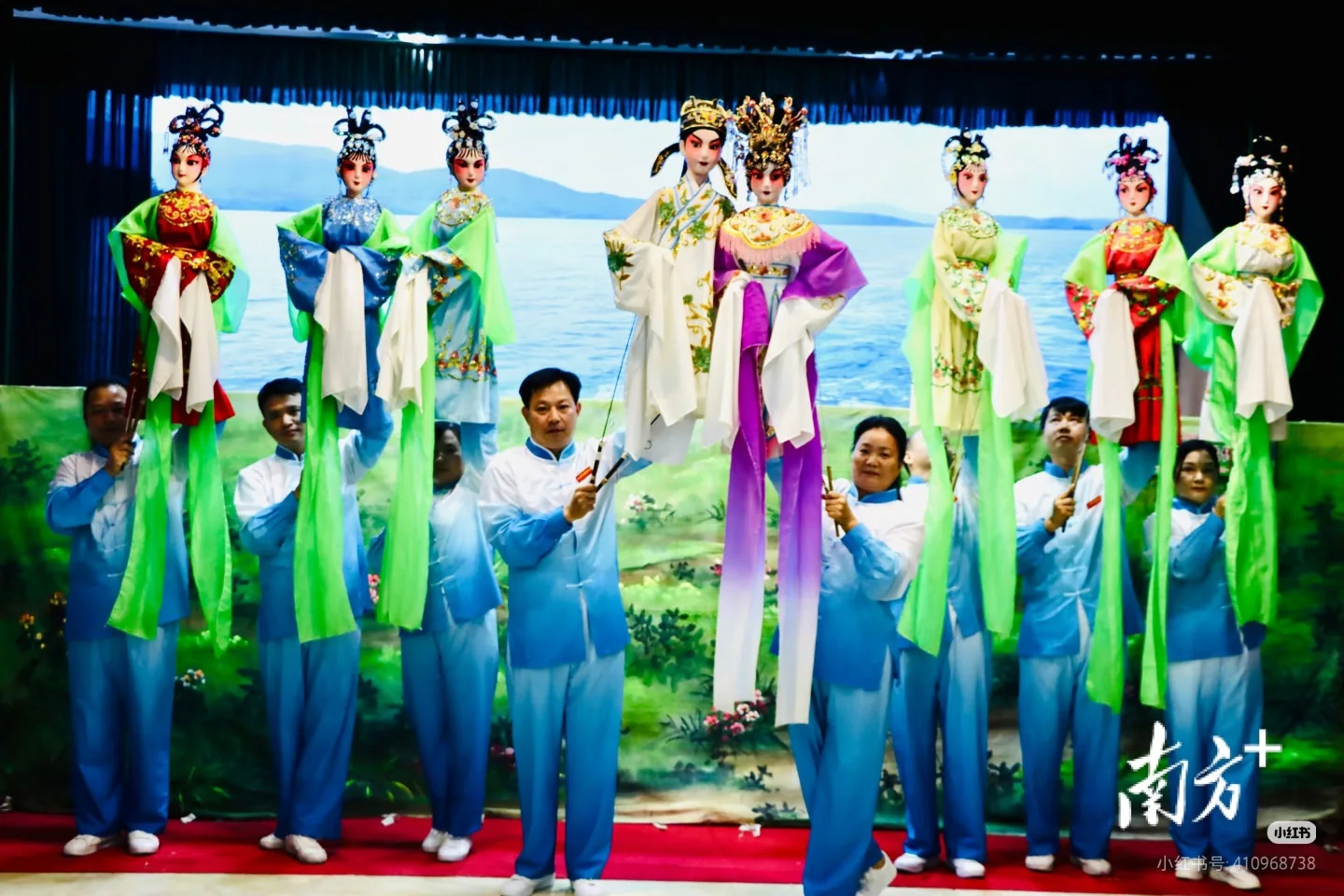
早期的高州木偶戏多由单人用高州方言演出,后人称之为小班。清末发展出四五人的中班,后又产生了十人以上的大班。二十世纪七八十年代进入鼎盛时期,戏班发展到两千多班,年演出一万多场。德日两国木偶戏剧家曾来高州观摩交流,香港海燕唱片公司也曾录制剧目并在港澳及东南亚发行。2006年,高州木偶戏列入首批国家级非物质文化遗产推荐项目。
Gaozhou puppet shows, commonly known as “ghost puppet plays,” belong to the glove puppet tradition and are said to derive their name from the practice of “carving wood into figurines.” According to legend, they originated from Fujian glove puppetry and emerged during the Wanli era of the Ming Dynasty, boasting a history of over 400 years. During the annual “Nianli” (community festival) on the lunar calendar, puppet performances are staged in nearly every village across Gaozhou, with singing and chanting creating a festive atmosphere.
Early Gaozhou puppet shows were predominantly performed by a single puppeteer in the Gaozhou dialect, later referred to as “small troupes.” By the late Qing Dynasty, “medium troupes” of four to five performers had developed, subsequently giving rise to “large troupes” of more than ten members. From the 1970s to the 1980s, Gaozhou puppet theatre reached its zenith, with more than two thousand troupes staging over ten thousand performances annually. Japanese and German puppet dramatists came to Gaozhou for artistic exchange, and Hong Kong’s Haiyan Record Company recorded local productions for distribution in Hong Kong, Macao and Southeast Asia. Gaozhou puppet theatre was included in the national intangible cultural heritage list in 2006.
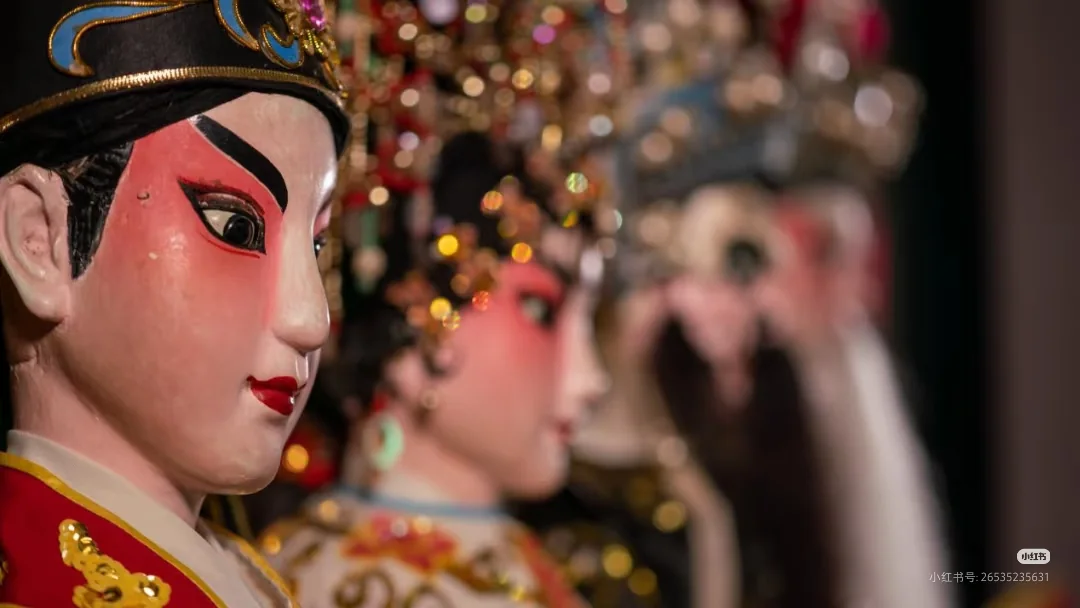
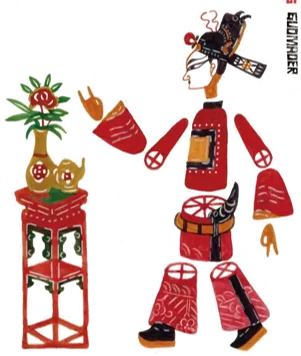
高州木偶戏所用木偶以杖头木偶为主。木偶头部选用樟木或松枝木雕刻,内部设置机关,眼、口可活动;三根木杖分别控制偶人的头颈与双手。表演时,木偶可以完成开合扇子、穿衣、戴帽、斟酒、拿书、写字和射箭等动作,搭配手工刺绣的传统戏服,表现力丰富。
木偶可按角色分为生、旦、净、丑四大行当,脸谱彩绘随人物性格变化;也可按演出班底规模分为小班、中班、大班,适配不同大小的民俗演出场景。
The puppets used in Gaozhou puppet shows are mainly rod puppets. Their heads are carved from camphor or pine wood and fitted with internal mechanisms that allow the eyes and mouths to move. Three wooden rods control the puppet’s head and hands. During a performance, the puppet can open and close a fan, put on clothes and hats, pour wine, hold a book, write and shoot arrows. Combined with hand-embroidered traditional costumes, these movements create a rich range of expression.
The puppets are divided into four principal roles—sheng (male lead), dan (female lead), jing (painted face) and chou (clown)—with facial painting reflecting each character’s personality. Performance companies are also grouped as small, medium or large troupes to suit folk stages of different scales.
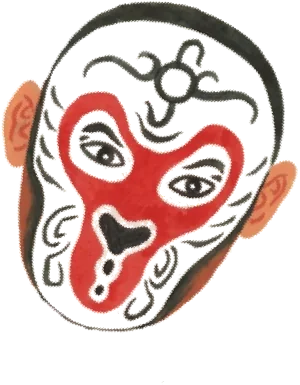
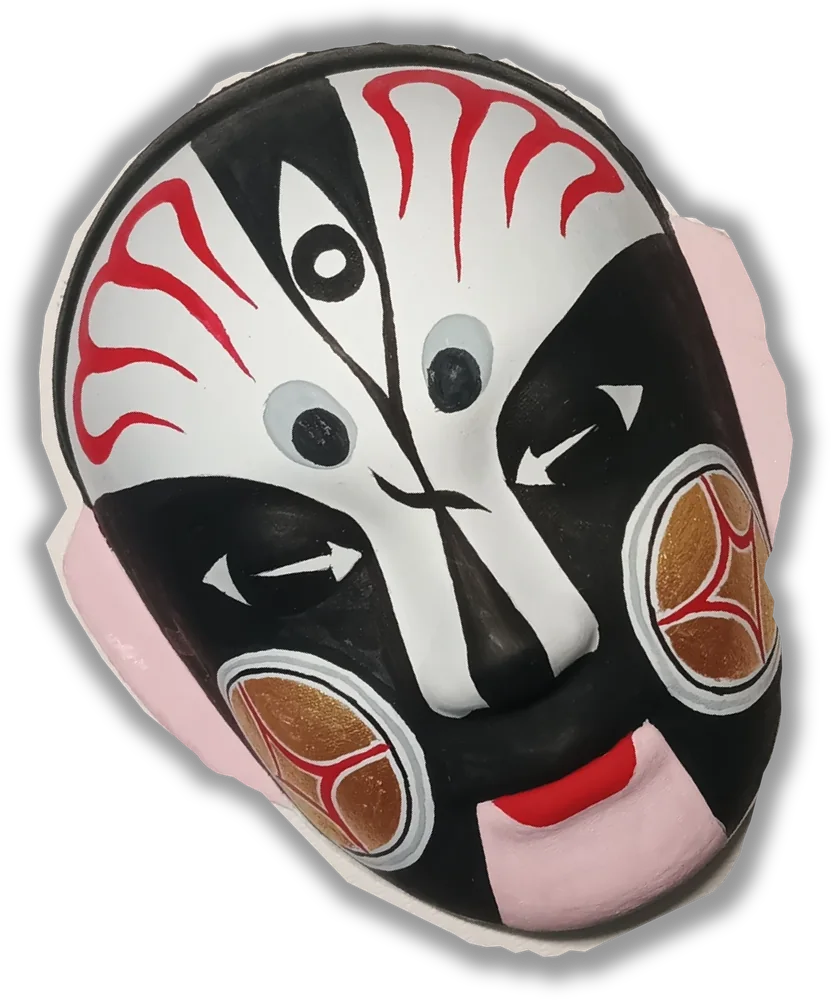
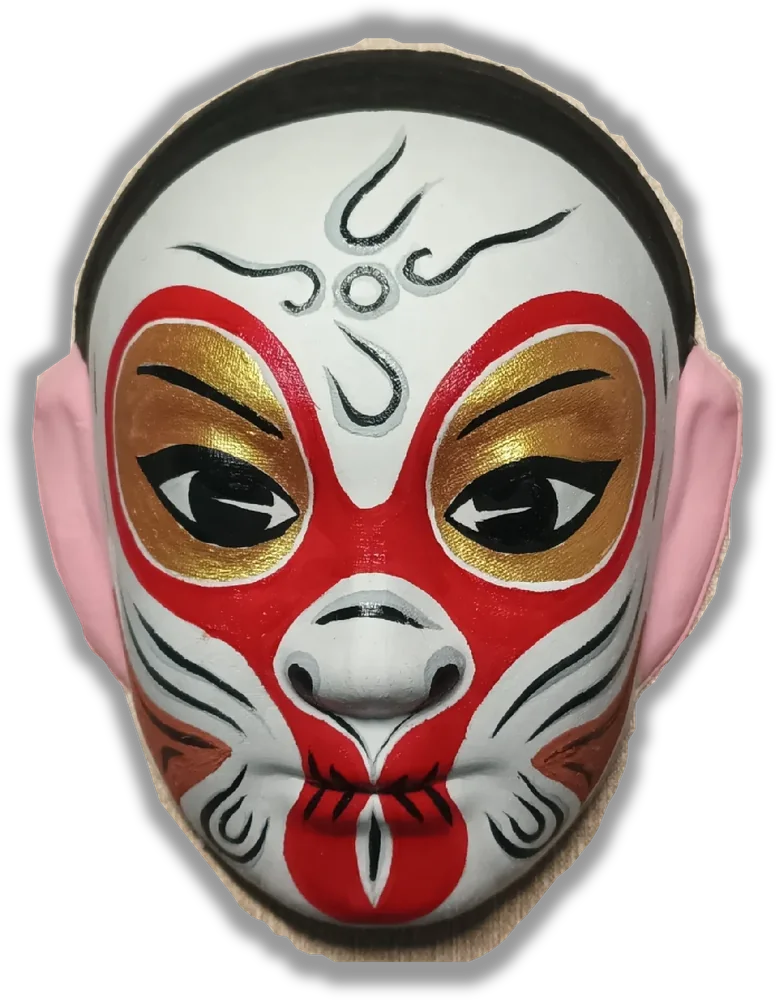
高州木偶脸谱借鉴传统戏曲脸谱的表意体系,以彩绘纹样和色彩区分人物品性与身份,并绘于樟木雕刻的偶头之上。红色多代表忠勇赤诚、刚正不屈;黑色象征刚正无私、耿直威严;白色多用于塑造奸诈阴险的反派;蓝、绿等杂色则常表现性格刚烈、草莽侠义的豪杰。
脸谱同时配合生、旦、净、丑行当特征:生旦脸谱素雅清淡,侧重清秀温婉的神态;净角纹样繁复浓艳,视觉冲击力强;丑角会在面部绘制标志性的小块白粉,自带诙谐感。
The facial makeup of Gaozhou puppets draws on the symbolic system of traditional opera masks, using painted patterns and colours to distinguish characters’ personalities and social roles on carved camphorwood heads. Red faces typically represent loyal, courageous and upright protagonists; black faces symbolize integrity, impartiality and dignified severity, such as Bao Gong; white faces are commonly used for treacherous and cunning villains; while blue, green and other mixed-colour faces often depict heroic figures with fierce temperaments and a chivalrous spirit.
The makeup also corresponds to the four principal opera roles. Sheng and dan use simple, elegant designs that emphasize refined expressions; jing roles feature intricate, vivid patterns with strong visual impact; and chou roles are marked by distinctive patches of white powder on the face, conveying a naturally humorous tone.
选择传统色,为属于你的木偶脸谱落笔。
当前区域:完整面部 点击右侧颜料即可上色
选择颜料

朱砂 · 忠勇、热烈与正直
选中颜色后,可先点击“完整面部”铺满底色,再为额心、双眼和嘴部叠加纹样色;经典方案会自动搭配眉额与颊部配色。
脸谱展示
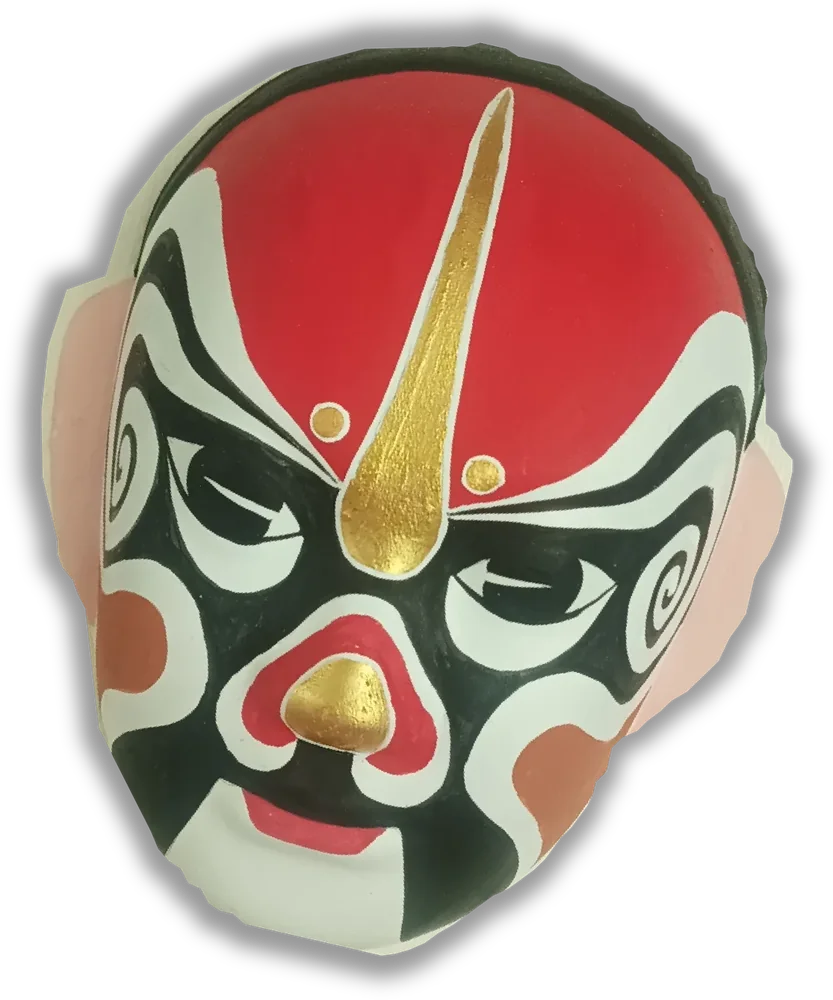
从一块木、一方布开始,认识木偶诞生的过程。
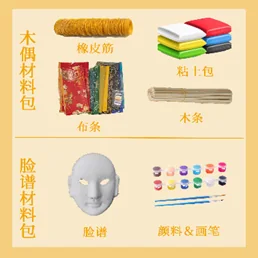

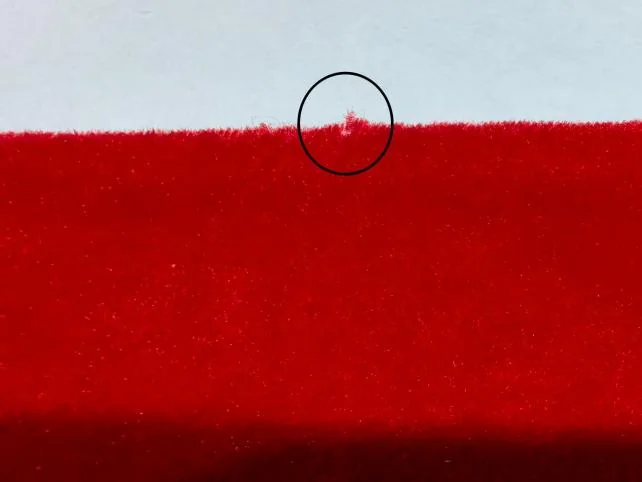
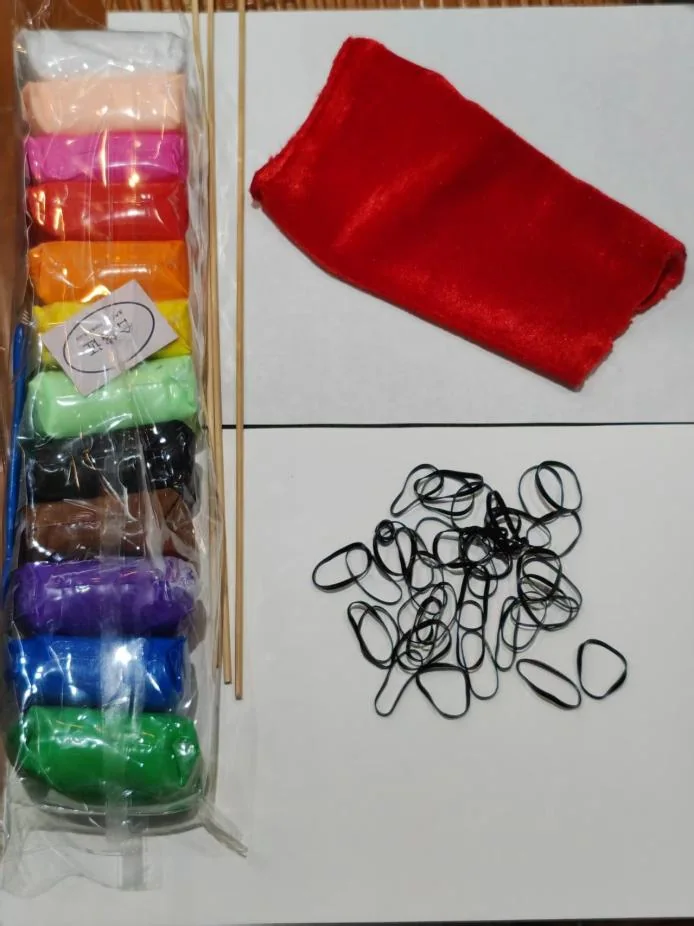
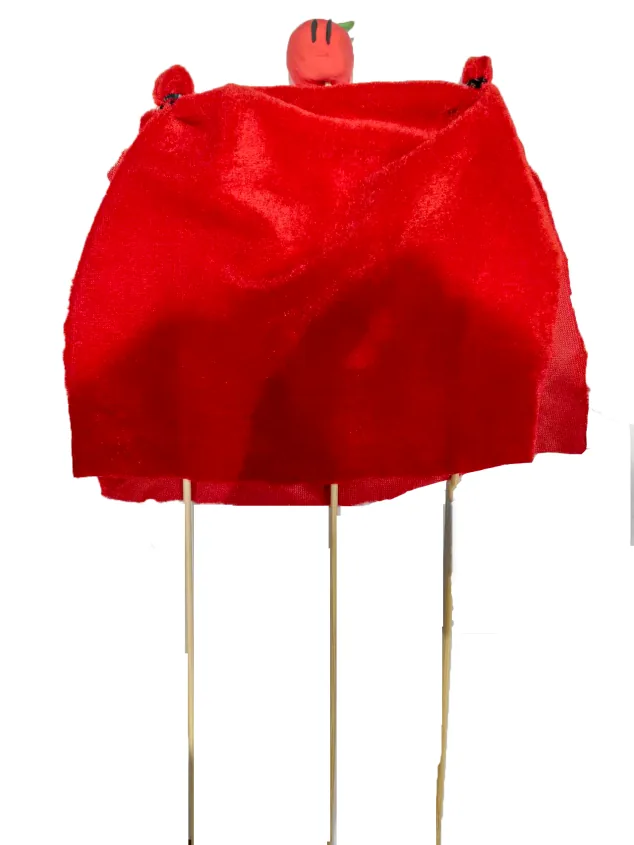
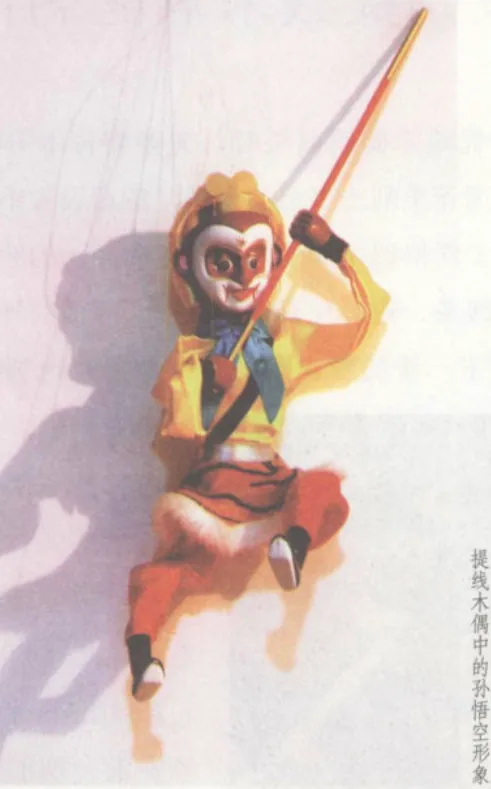
 妙妙小提示准备一块布料、三根木条、三个橡皮筋和适量黏土。使用剪刀等工具时,需要老师或家长陪同。
亲子材料包教程
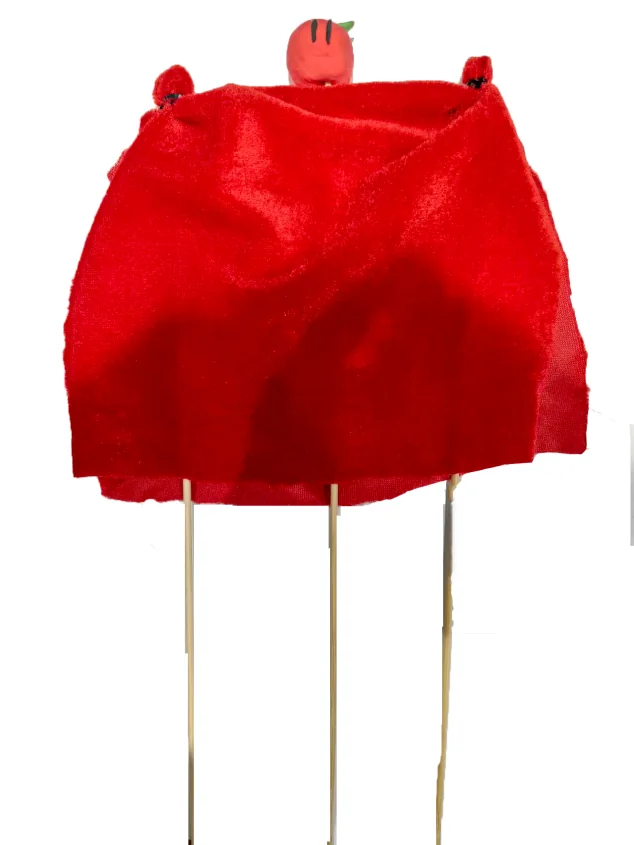
对折布料将布料对折后平铺在桌面。
剪出小洞洞口只需让木条刚好穿过。
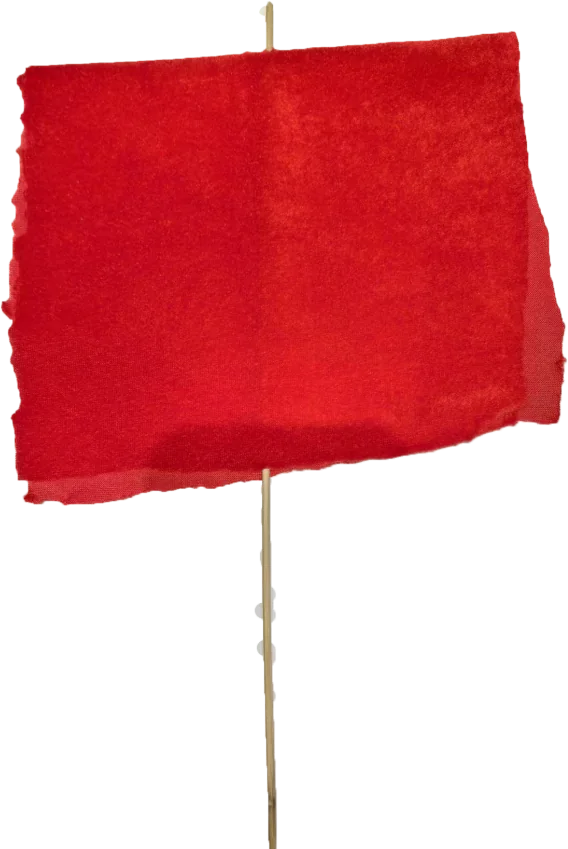 穿入木条
把中间木条穿入小洞。
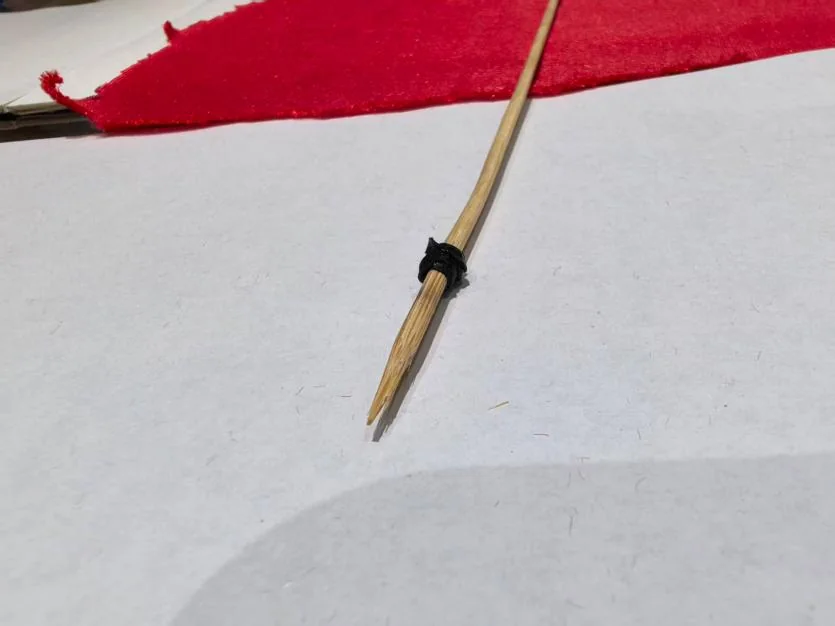 绑橡皮筋
在木条末端固定一根橡皮筋。
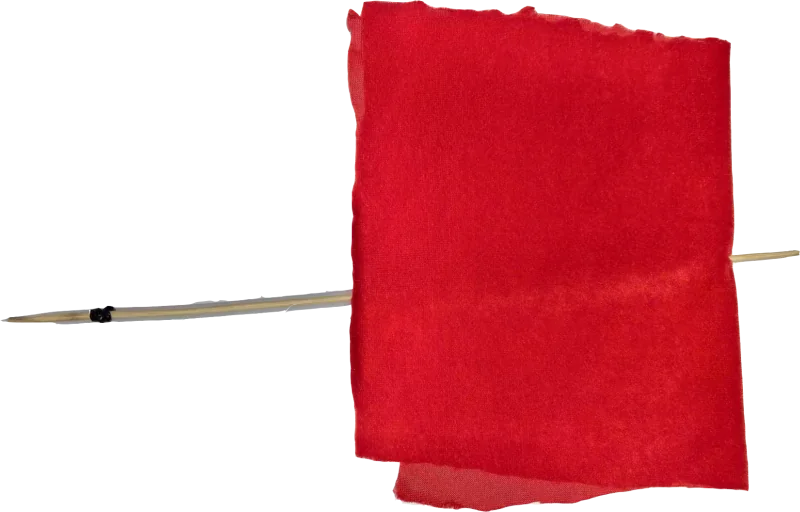 固定上部
将橡皮筋向上移至木条上部。
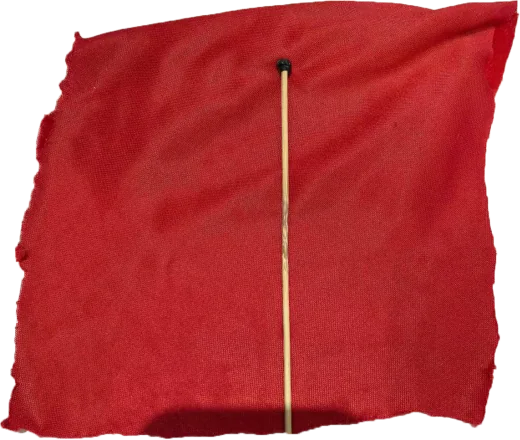 放置手杆
两侧木条将成为木偶手部操纵杆。
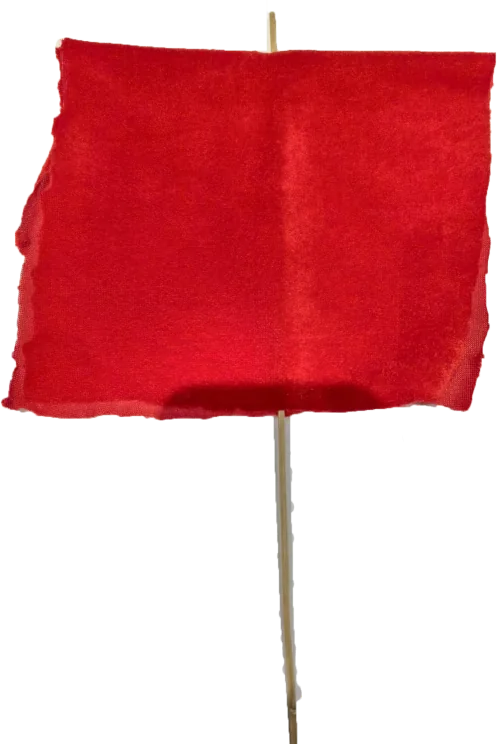 连接双手
用橡皮筋连接布料与两侧木条。
 塑造偶头
用黏土制作独特的木偶头部。
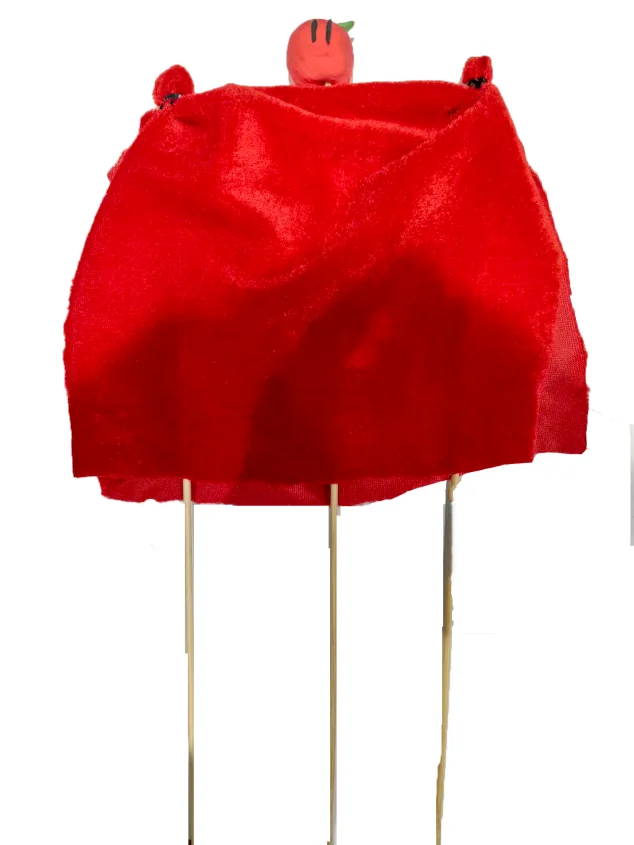 安装完成
装上偶头,调整双手大小与动作。
传统制作工艺
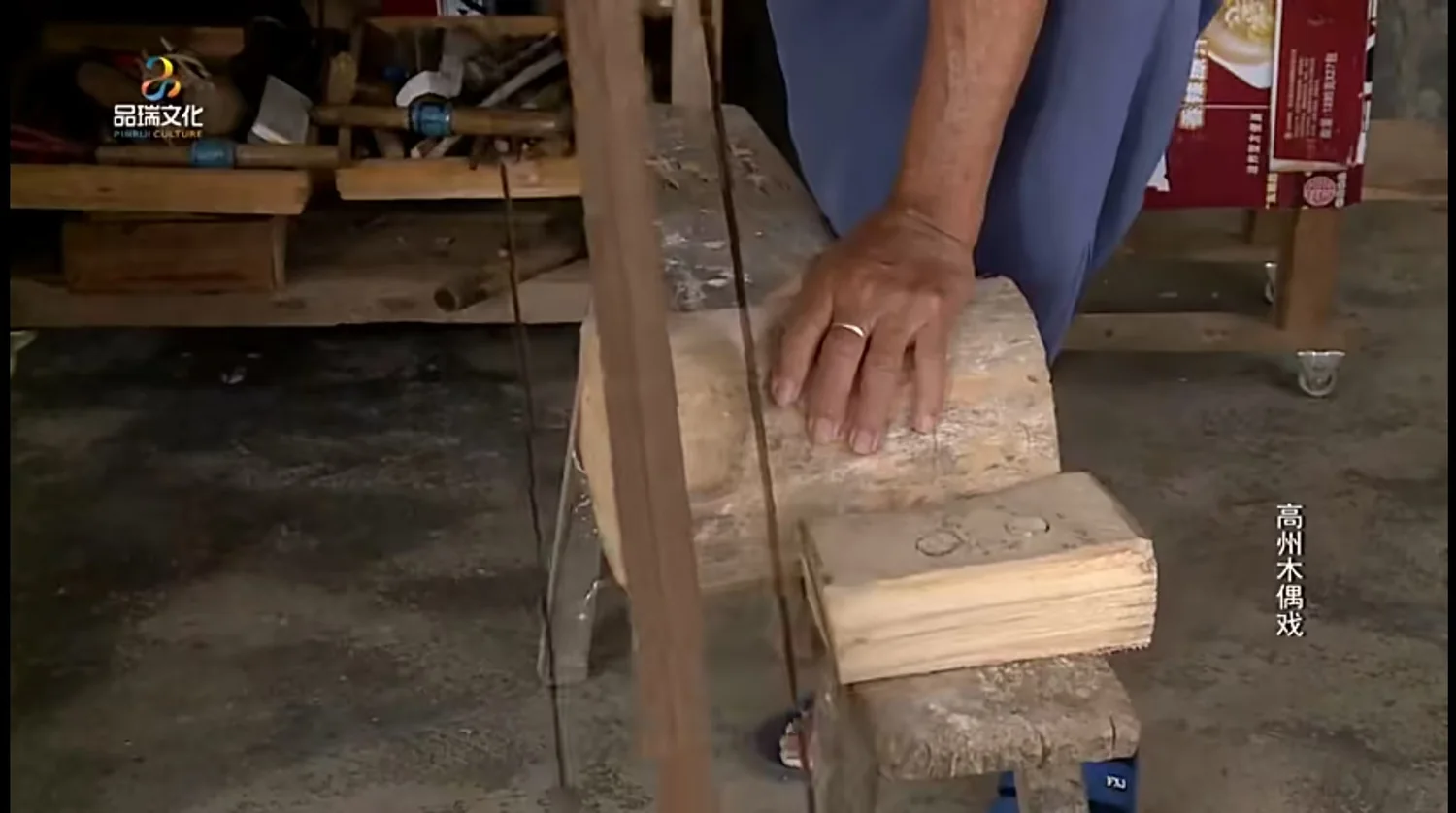 选材
选择细软坚韧、便于雕刻的木材。
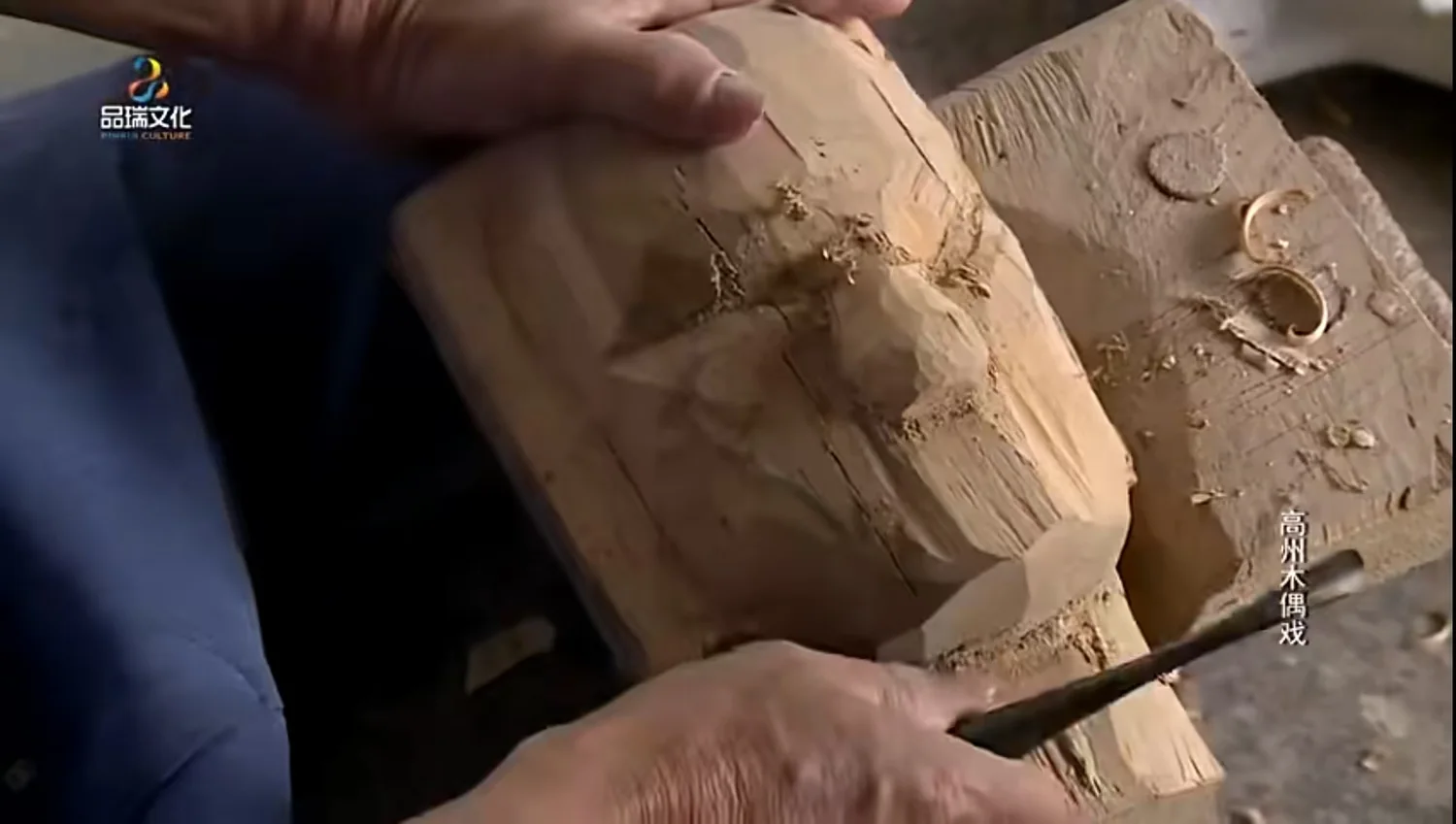 雕刻
根据角色性格设计五官与身形。
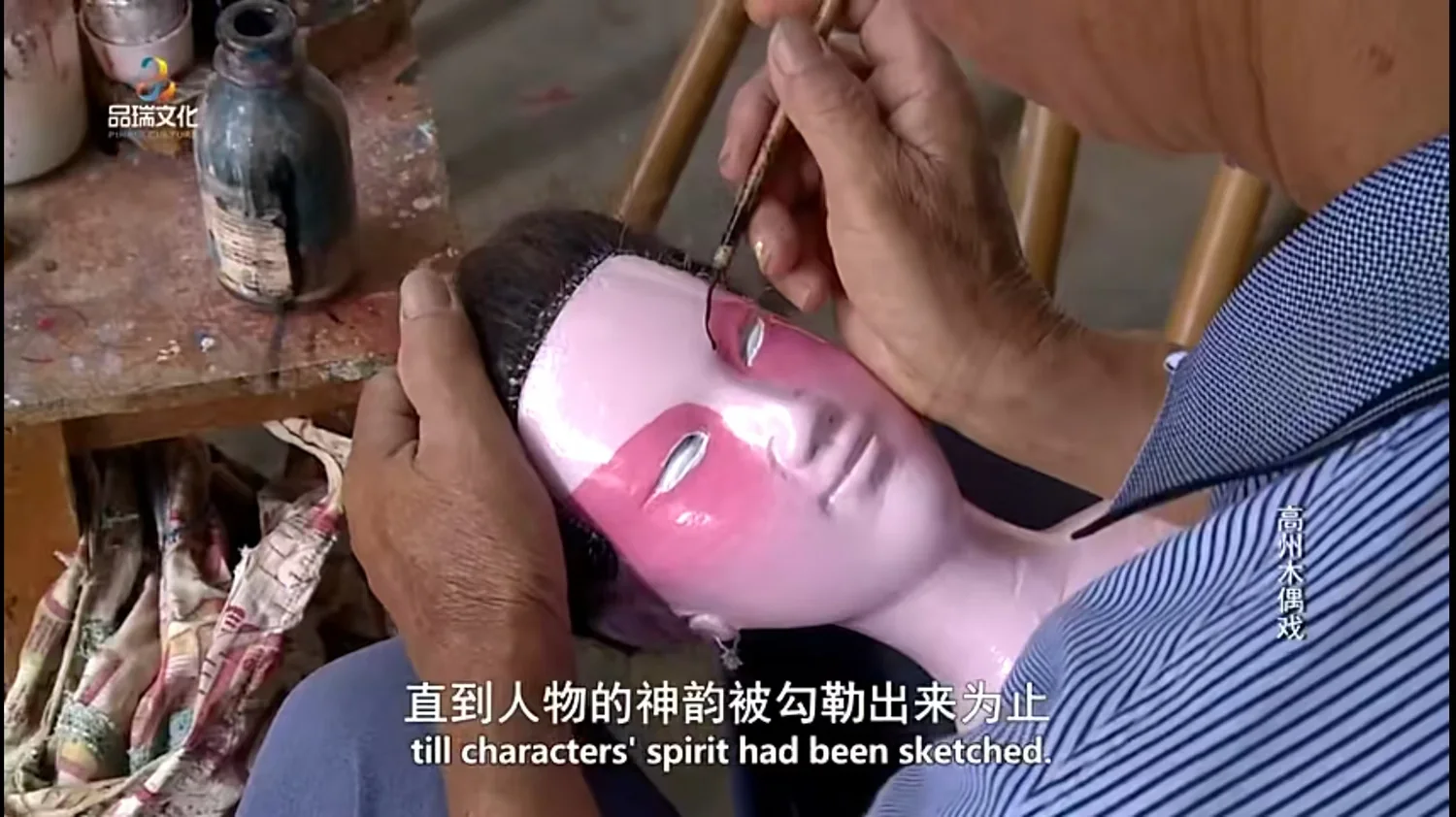 彩绘
用色彩和纹样表现人物身份。
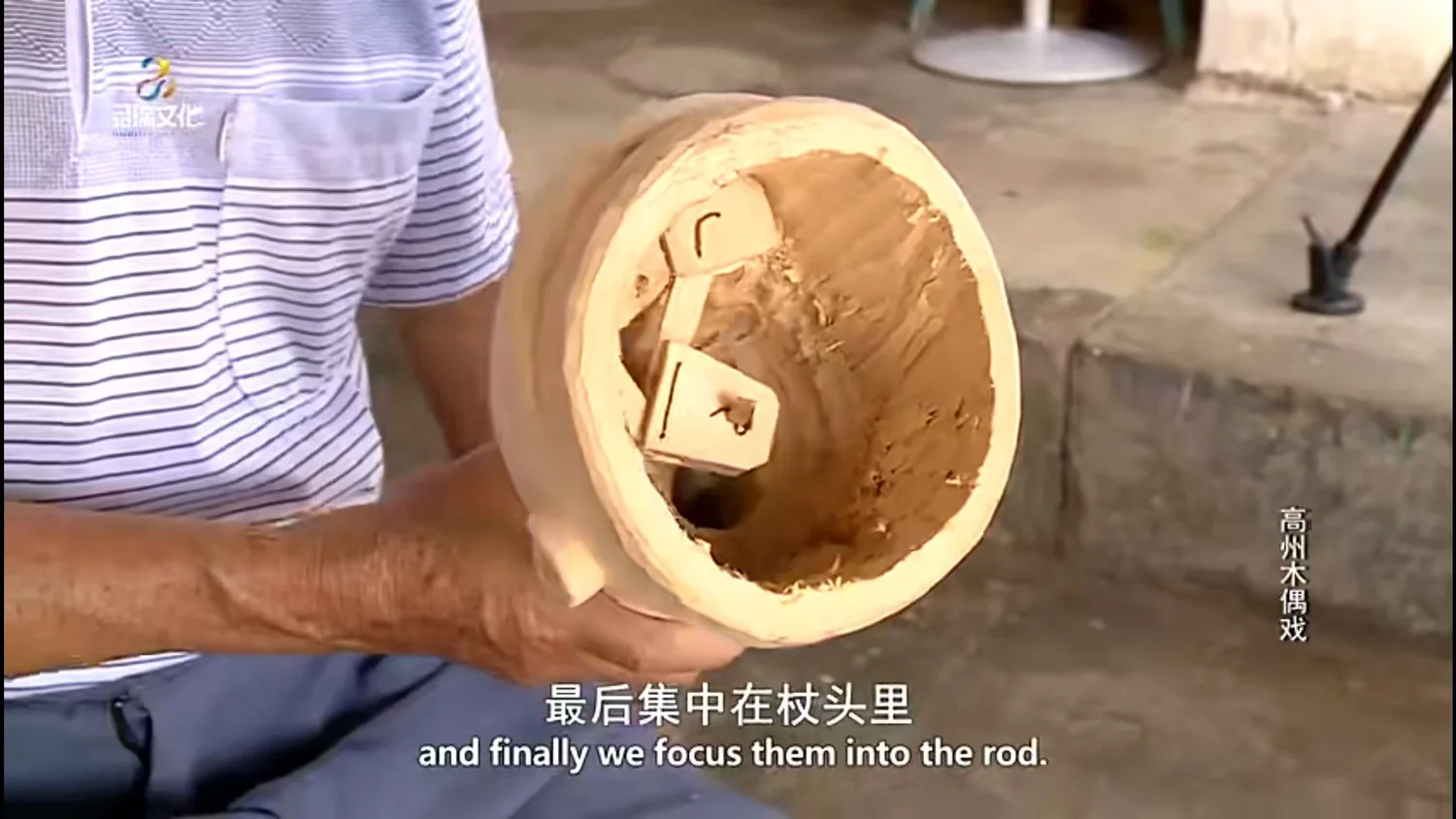 装配
安装命杆、手签和服饰头盔。
 调试
反复调整,让各部位运动灵活。
选取质地细软且坚韧的木材(如松枝木),易于雕刻且不易变形。
Choose a soft and sturdy wood (such as pine wood) that is easy to carve and not easy to deform.
头部雕刻是木偶制作的关键部分,需根据角色性格、身份来设计五官。雕刻会采用变形和夸张的手法强调人偶眉眼,使其更具表现力。身体雕刻包括上身躯、下身躯、手、脚等部分,雕刻相对简洁。
Head carving is a key part of puppet production, and the five features should be designed according to the character's personality and identity. Sculpting uses distortion and exaggeration to emphasize the figure's eyebrows and eyes, making it more expressive. Body carving includes the upper body, lower body, hands, feet, and other parts, and is relatively simple.
面部彩绘需根据角色性格、身份采用不同色彩和图案。红色代表忠诚和勇敢,黑色代表正直和刚毅,白色代表奸诈邪恶,蓝色代表沉稳智慧,绿色代表特殊身份的人物,黄色代表尊贵威严,紫色代表神秘高贵,金色代表神圣威严,银色代表高洁清冷。
Face painting should use different colours and patterns according to the character's personality and identity. Red represents loyalty and bravery, black represents integrity and fortitude, white represents cunning and evil, blue represents calm wisdom, green represents people with special status, yellow represents dignity and majesty, purple represents mystery and nobility, gold represents sacred majesty, and silver represents noble reserve.
在木偶头部和肢体关键部位安装操纵杆,包括头部的命杆和手部的签子,并根据不同角色配上相应服饰、发饰和头盔。
Install control rods at key parts of the puppet's head and limbs, including the main rod for the head and sticks for the hands. Then match the puppet with appropriate clothing, hair accessories, and helmets according to its role.
调试时要确保各个部位运动灵活,需要不断调整操纵装置和木偶各个部件,以达到最佳状态。
Adjustment ensures that every part moves flexibly. The control device and the puppet's components must be refined repeatedly until they work at their best.
荔乡烟火与掌中戏,在村落戏台相遇。
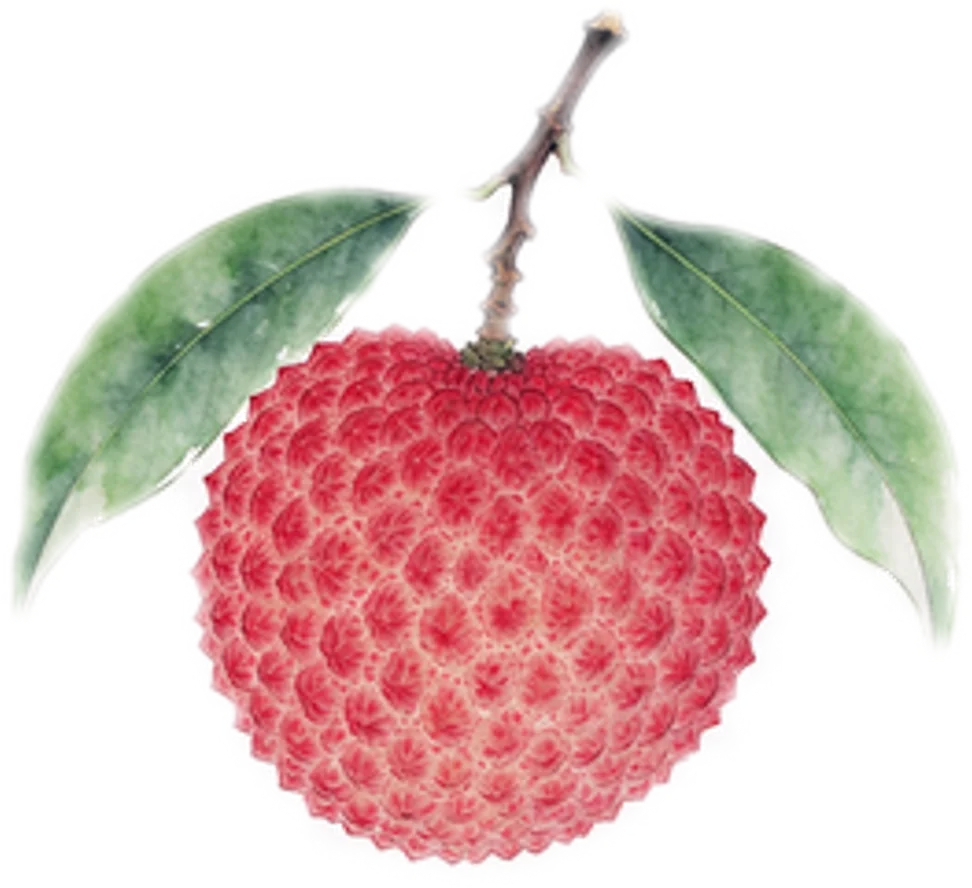
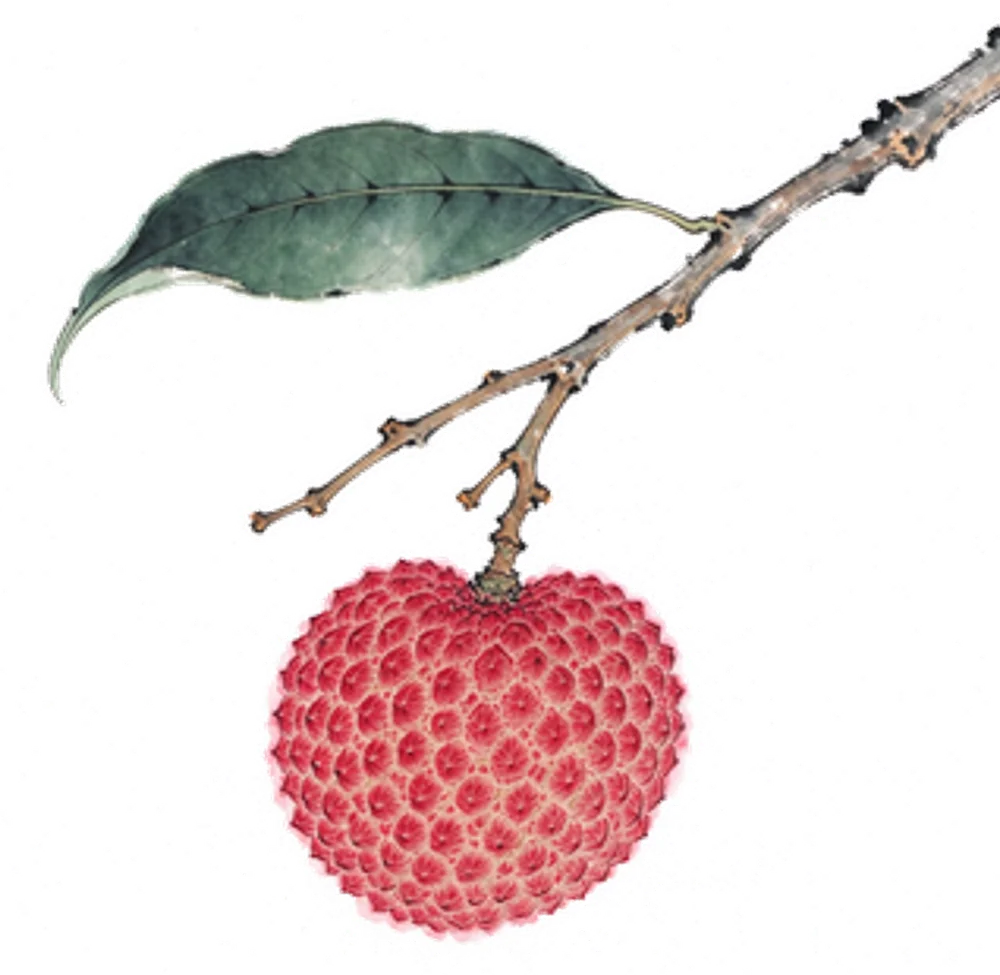
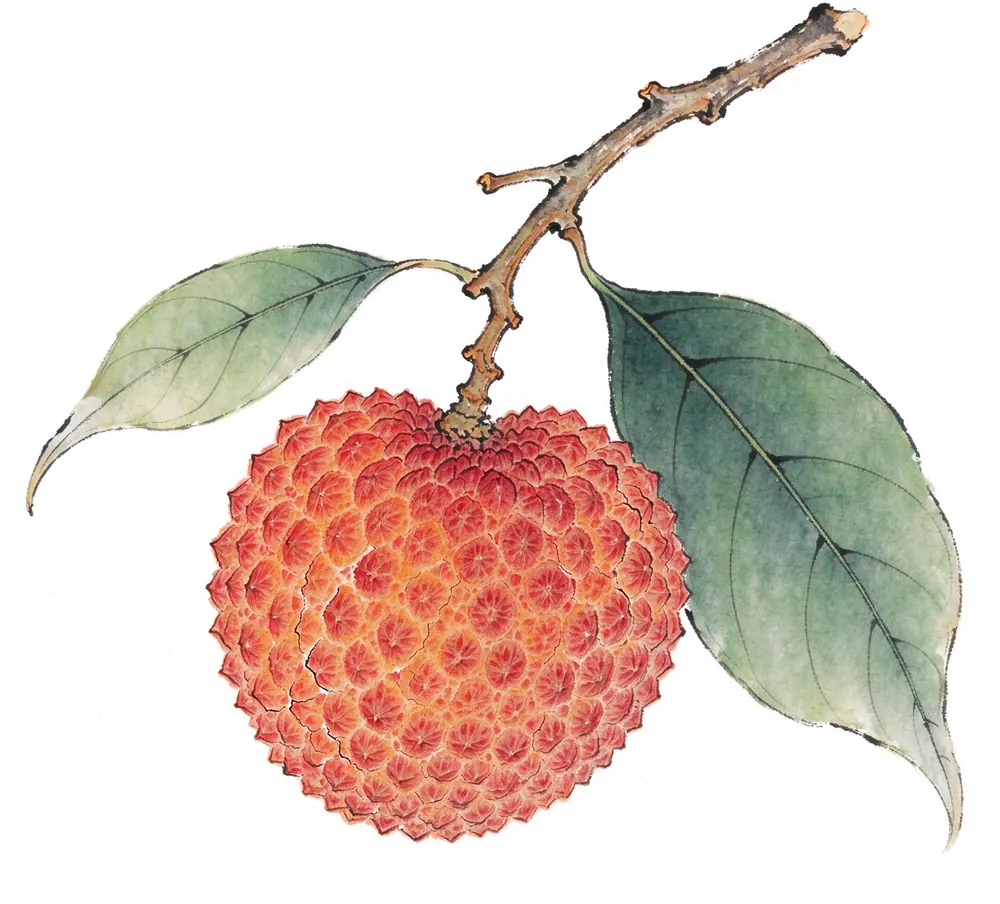
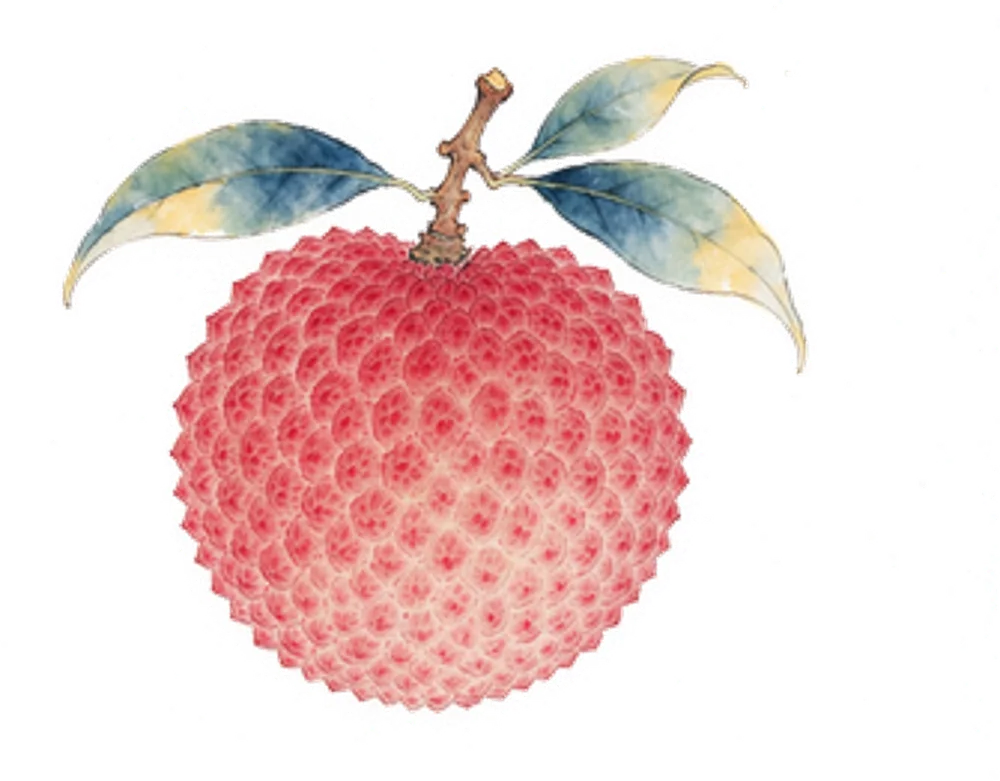
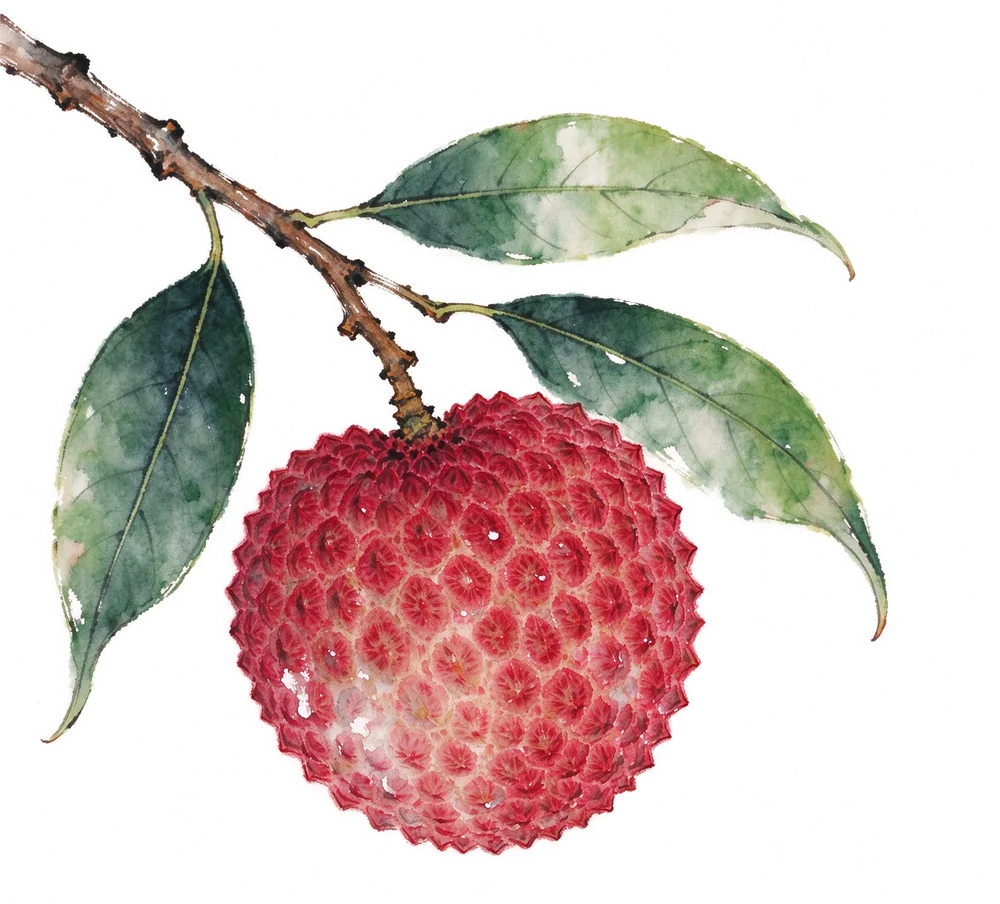
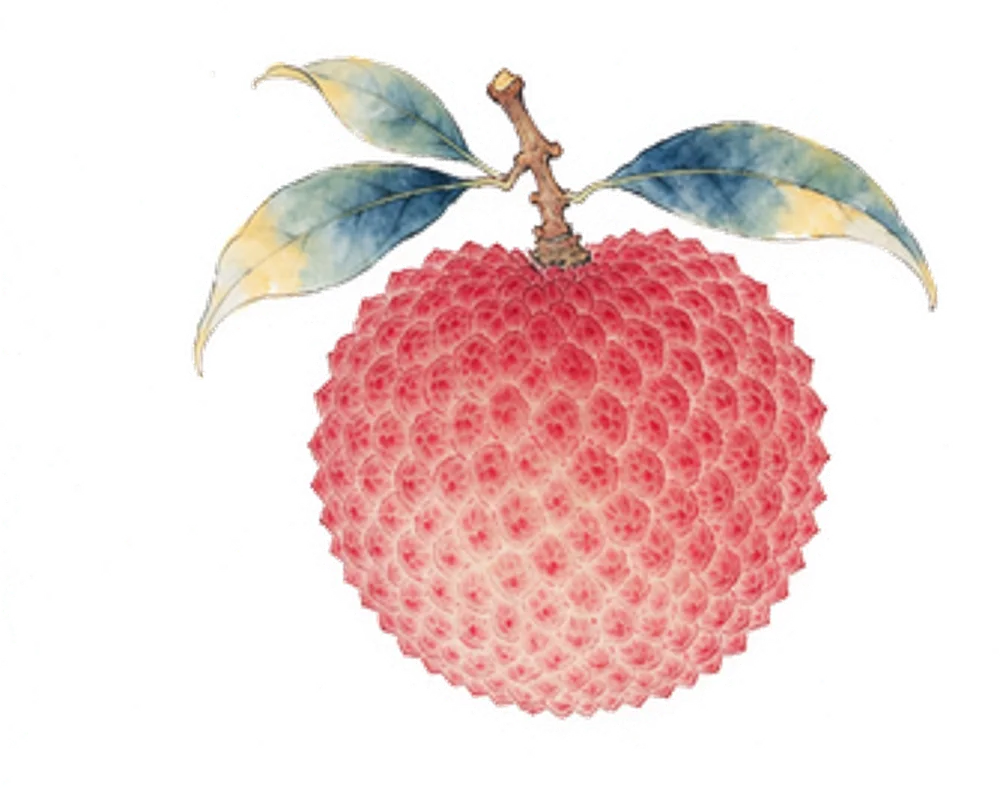
高州荔枝以历史久、面积大、产量高、品质优、成熟早、市场广而闻名。根子镇拥有国家农业部南亚热带作物名优基地和国家荔枝标准化示范区;成园于隋唐的贡园,是全国历史悠久、保存较完好的古荔枝园之一。
木偶戏与年例、乡村节庆、荔乡生活相互交织,共同构成高州鲜活的地方文化记忆。
把掌中戏的色彩与故事带回日常。
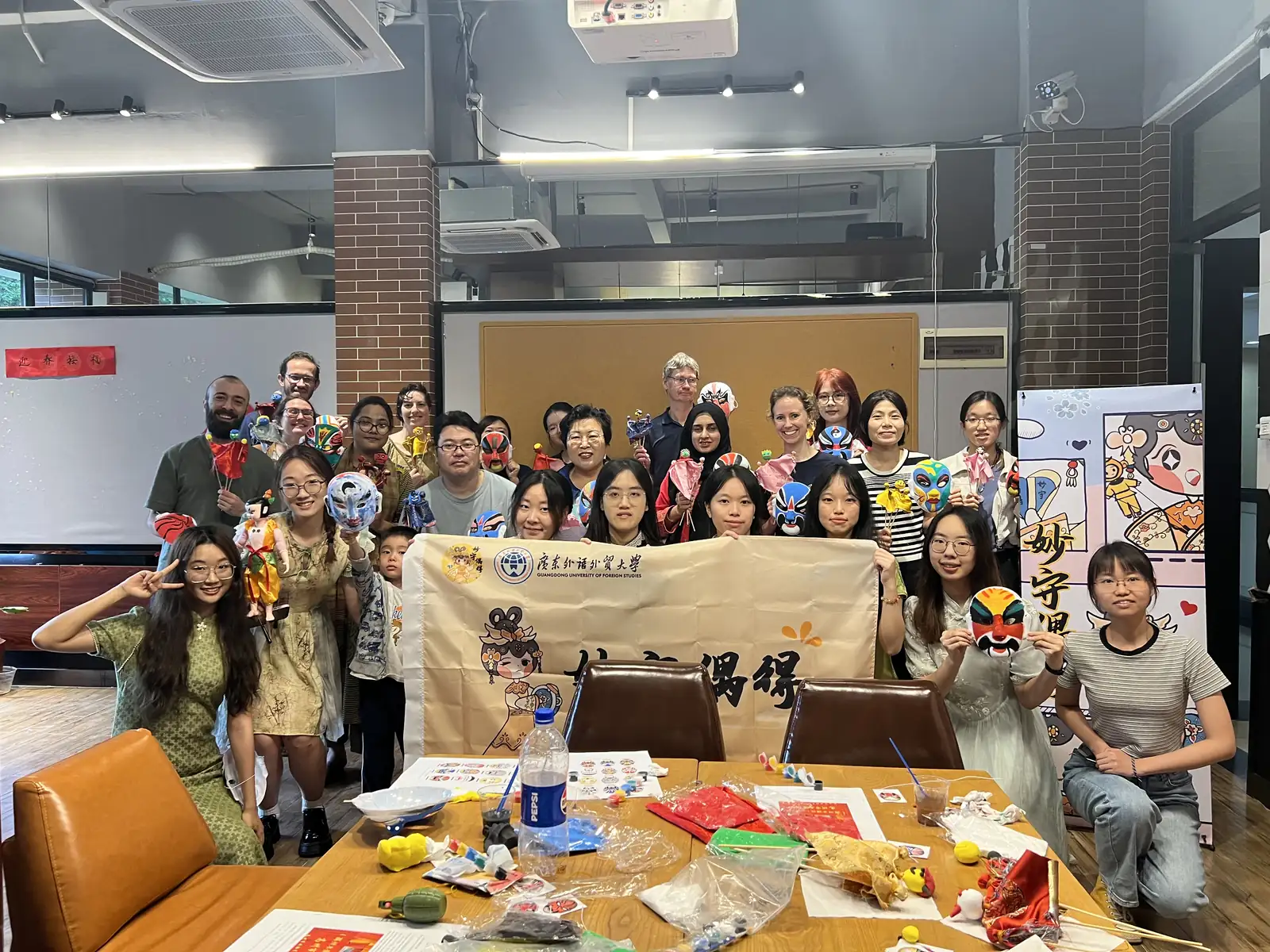
线下体验